
Introduction: Why Automation Interviews Are Tough for Experienced Candidates
For experienced QA and SDET professionals, interviews are no longer about “What is Selenium?” They focus on how you designed frameworks, solved flaky tests, integrated CI/CD, and improved test reliability at scale.
Hiring managers evaluate:
- Your hands-on automation testing experience
- Decision-making in framework design
- Ability to debug failures, optimize execution, and maintain tests
- Understanding of real-time project constraints
This article is a complete, interviewer-tested guide on automation testing interview questions for experienced candidates—covering core concepts, 100+ Q&A, real-world scenarios, code examples, and CI/CD practices.
What is Automation Testing? (Simple Definition + Example)
Automation Testing is the process of using tools and scripts to automatically execute test cases, compare expected vs actual results, and report defects—without manual intervention.
Simple Example
Instead of manually logging into a website every release:
- Write a script that opens the browser
- Enters username/password
- Verifies dashboard load
- Runs automatically on every build
Automation is ideal for:
- Regression testing
- Smoke & sanity testing
- Data-driven scenarios
- CI/CD pipelines
Core Concepts Every Experienced Automation Engineer Must Know
1. Automation Test Pyramid
- Unit Tests – Fast, stable, cheapest
- API Tests – Business logic validation
- UI Tests – Slow, expensive, fragile
👉 Experienced candidates must justify why not to automate everything at UI level.
2. Automation Framework Types
| Framework | Use Case |
| Linear | Small scripts |
| Modular | Reusable functions |
| Data-Driven | Multiple datasets |
| Keyword-Driven | Non-technical testers |
| Hybrid | Real-world enterprise projects |
| BDD | Business-readable tests |
3. Design Patterns
- Page Object Model (POM)
- Factory Pattern
- Singleton WebDriver
- Builder Pattern
Automation Testing Interview Questions for Experienced (100+ Q&A)
Basic-to-Advanced Automation Interview Q&A
1. What automation frameworks have you worked on?
Answer:
I have designed and maintained hybrid automation frameworks combining Page Object Model, data-driven testing, and TestNG/Cucumber. The framework supports cross-browser execution, parallel runs, logging, and CI/CD integration.
2. What is Page Object Model (POM)?
Answer:
POM is a design pattern where:
- Each web page is represented as a class
- Web elements are defined as variables
- Actions are written as methods
This improves readability, maintainability, and reusability.
3. How do you handle dynamic web elements?
Answer:
- Use relative XPath
- Use contains(), starts-with()
- Wait for visibility using explicit waits
- Avoid index-based locators
4. Difference between implicit and explicit wait?
| Implicit Wait | Explicit Wait |
| Global | Element-specific |
| Not flexible | Highly flexible |
| Can cause delays | Better synchronization |
5. How do you handle flaky tests?
Answer:
- Replace Thread.sleep() with explicit waits
- Stabilize locators
- Validate test data
- Isolate environment issues
- Add retry analyzer cautiously
6. What is TestNG and why is it used?
Answer:
TestNG provides:
- Annotations
- Parallel execution
- Dependency management
- Data providers
- HTML reports
7. Explain Selenium locators with examples
<input id=”email” name=”email” class=”input-box” />
driver.findElement(By.id(“email”));
driver.findElement(By.name(“email”));
driver.findElement(By.xpath(“//input[@id=’email’]”));
driver.findElement(By.cssSelector(“input.input-box”));
8. XPath vs CSS Selector
- XPath supports backward traversal
- CSS is faster and simpler
- XPath works well for dynamic elements
9. How do you perform cross-browser testing?
Answer:
- Use parameterized TestNG XML
- Use cloud tools (BrowserStack, Sauce Labs)
- Use WebDriverManager
10. What is Data-Driven Testing?
Answer:
Running the same test with multiple data sets from:
- Excel
- CSV
- JSON
- Database
{
“username”: “admin”,
“password”: “secret”
}
Real-Time Scenario-Based Automation Testing Questions (15)
Scenario 1: Login Test Fails Randomly in CI
Solution:
- Add explicit waits
- Increase page load timeout
- Validate environment stability
Scenario 2: UI Changes Break 200 Tests
Solution:
- Centralize locators in POM
- Avoid hardcoded XPath
- Use test IDs
Scenario 3: Parallel Tests Failing
Solution:
- Use ThreadLocal WebDriver
- Avoid static variables
- Isolate test data
Scenario 4: Test Execution Takes 6 Hours
Solution:
- Enable parallel execution
- Move validations to API level
- Reduce UI coverage
Scenario 5: CAPTCHA Blocks Automation
Solution:
- Disable CAPTCHA in test env
- Use API authentication
- Use feature flags
Code Examples: Selenium + Java + Python + POM
Java Page Object Example
public class LoginPage {
WebDriver driver;
@FindBy(id=”username”)
WebElement username;
@FindBy(id=”password”)
WebElement password;
@FindBy(id=”loginBtn”)
WebElement loginBtn;
public void login(String user, String pass){
username.sendKeys(user);
password.sendKeys(pass);
loginBtn.click();
}
}
Python Selenium Example
driver.get(“https://example.com”)
driver.find_element(By.ID,”email”).send_keys(“test@test.com”)
driver.find_element(By.ID,”submit”).click()
TestNG XML for Parallel Execution
<suite parallel=”tests” thread-count=”3″>
<test name=”ChromeTest”>
<classes>
<class name=”tests.LoginTest”/>
</classes>
</test>
</suite>
Cucumber Feature File
Scenario: Successful Login
Given user is on login page
When user enters valid credentials
Then dashboard should be displayed
CI/CD + Jenkins + Git + Automation Frameworks
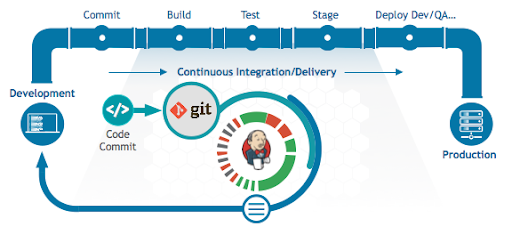
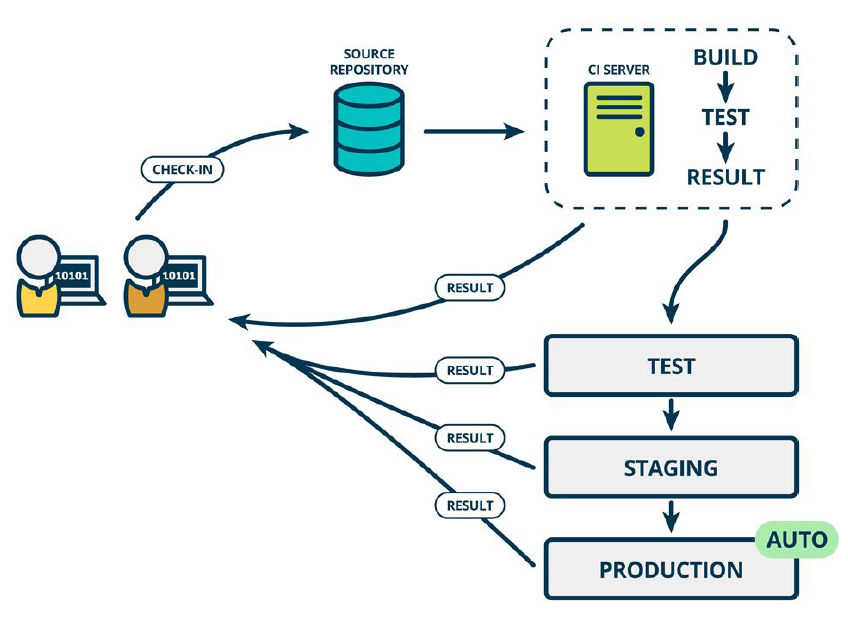
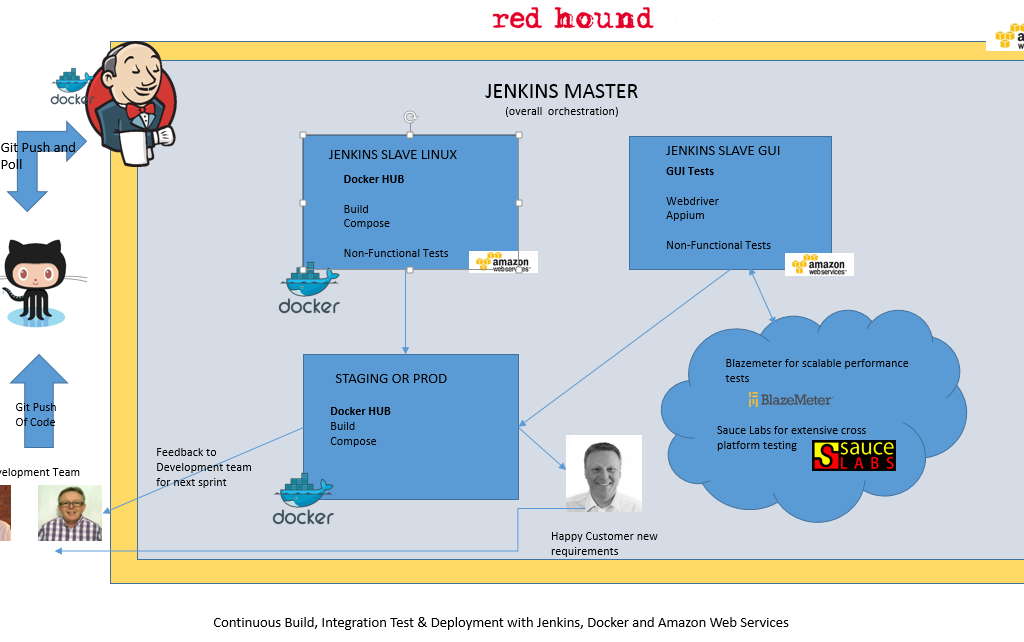
CI/CD Flow
- Developer commits code to Git
- Jenkins triggers build
- Automation tests execute
- Reports generated
- Results emailed to team
Why CI/CD Matters in Interviews
Interviewers expect:
- Pipeline knowledge
- Failure analysis
- Report publishing
- Environment handling
Common Automation Interview Mistakes (Experienced Candidates)
❌ Claiming automation without framework design
❌ Over-automation of unstable features
❌ Ignoring test maintenance
❌ Using hard waits
❌ Not understanding CI failures
How to Answer Like a Pro
✔ Talk in real project context
✔ Explain why you chose a solution
✔ Mention trade-offs
✔ Share lessons learned
Quick Revision Sheet
- Automation ≠ UI only
- Framework design matters more than tools
- POM improves maintainability
- Explicit waits over sleeps
- CI/CD knowledge is mandatory
- Flaky test handling is critical
FAQs (Featured Snippet Ready)
Q1. What are the most important automation testing interview questions for experienced?
Framework design, flaky test handling, CI/CD integration, parallel execution, and real-time scenarios.
Q2. How many automation tools should an experienced tester know?
Depth matters more than count—strong expertise in one stack is better than surface-level knowledge of many.
Q3. Is Selenium enough for senior roles?
Selenium plus framework design, API testing, and CI/CD knowledge is expected.